
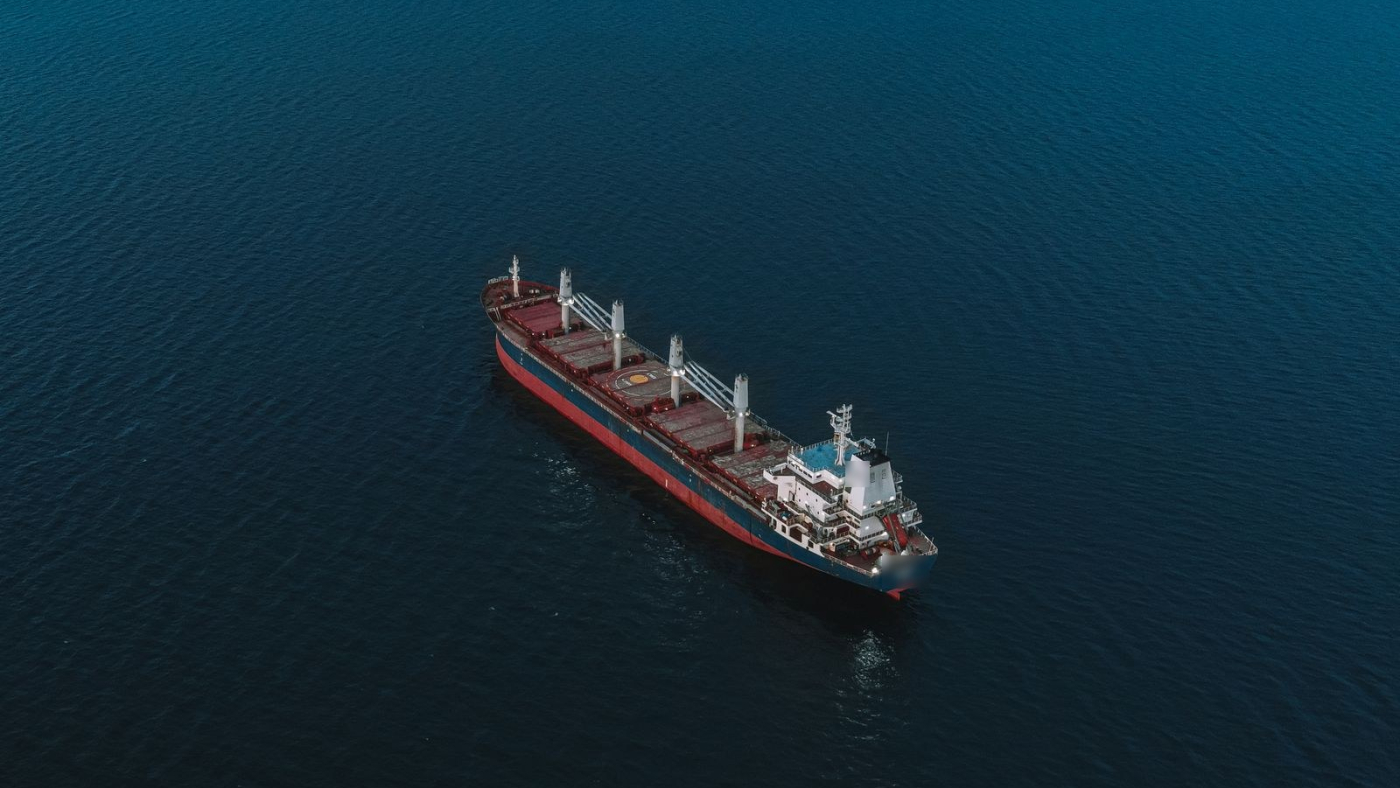
Oman’s capital market has a second chance to own a piece of one of the country’s flagship logistics companies. Asyad Group is selling an additional 6.25% of Asyad Shipping Company SAOG (MSX: ASCO), about 19 months after the shipping company’s debut on the Muscat Stock Exchange. Here is what the offering involves, who can take part, and why Oman’s ports and shipping sector are drawing so much attention right now.
What Is the “Second Round” of the Asyad IPO?
Strictly speaking, this is not a new IPO. Asyad Shipping first listed on the MSX on March 12, 2025, when Asyad Group sold 20% of the company at 0.123 OMR per share, the top of its price range. That offering raised about OMR 128.1 million and was covered 1.4 times, according to the Oman Observer.
The new transaction is a secondary offering. Asyad Group, the selling shareholder, is offering 325,546,518 existing shares, equal to 6.25% of Asyad Shipping’s issued capital. The goal is to raise the company’s free float to 25%, the minimum required by Oman’s Financial Services Authority (FSA). Because the shares already exist, Asyad Shipping itself receives no new capital; the proceeds go to Asyad Group.
Key Facts at a Glance
- Total size: 325.5 million existing shares (6.25%), split into an institutional tranche (5%) and a retail tranche (1.25%).
- Institutional tranche: 260.4 million shares sold through an accelerated bookbuild that closed on October 22, 2026. It was priced at 0.195 OMR per share, raised about OMR 50.8 million, and was well oversubscribed by investors in Oman and abroad.
- Retail tranche: 65,109,304 shares at a fixed price of 0.195 OMR, worth about OMR 12.7 million in total.
- Retail subscription period: October 28 to November 2, 2026.
- Lock-up: Asyad Group’s remaining shares are locked up for 180 days from the institutional settlement date.
- Advisers: Oman Investment Bank and Sohar International Bank are the joint global coordinators and issue managers.
The 0.195 OMR offer price is about 58% above the 2025 IPO price of 0.123 OMR, a sign of how the market has re-rated the company since listing.
Who Can Subscribe?
According to the offering circular dated October 25, 2026, the retail offer is open to investors who hold an account and Investor Number with the Muscat Clearing & Depository (MCDC). The shares are split equally between two groups:
- Small retail investors: a minimum of 100 shares and a maximum of 50,000 shares.
- Large retail investors: a minimum of 50,100 shares, with no maximum.
Each investor may submit only one application, full payment is due on application, and no single applicant can receive more than 10% of the offer shares. If demand exceeds supply, shares are allocated pro rata. Applications are accepted through appointed collection agents, including several Omani banks and brokerage firms listed by Muscat Daily. The prospectus is distributed in Oman only.
The Business Behind the Ticker
Asyad Shipping operates across five segments: crude, refined products, gas, dry bulk, and container (liner) shipping. It serves customers in more than 60 countries. Its results for the first nine months of 2026 show:
- Gross revenue of OMR 277.4 million, up 10% year on year.
- EBITDA of OMR 183.1 million, up 20%, with a margin of 66%.
- Net profit after tax of OMR 67.7 million, up 107%.
- A fleet of 51 owned and 30 chartered-in vessels, with 16 more due for delivery.
The company credits higher freight and charter rates across all five segments, especially crude and liner, along with new vessel deliveries. It also reports about OMR 850 million in contracted future revenue running to 2036, and plans to invest up to OMR 1.4 billion in growth between 2026 and 2030.
Why Oman’s Logistics Story Matters Now
Ports on the Open Ocean
Geography is Oman’s biggest logistics advantage. Its three main ports, Sohar, Duqm, and Salalah, sit outside the Strait of Hormuz and open directly onto the Gulf of Oman, the Arabian Sea, and the Indian Ocean. That advantage became very concrete in 2026. When tensions around the Strait of Hormuz disrupted shipping from late February, importers began diverting cargo to ports outside the strait, including Sohar, then moving it onward by truck.
The impact shows up in the numbers. Ship calls at Sohar rose by about 40% in the weeks after the disruption began, according to figures from Oman’s transport ministry. In the first half of 2026, Salalah’s revenue rose by about a fifth to OMR 51 million and its cargo volumes grew 15%, as rerouted cargo flowed through the port. Asyad Group says berths, cargo handling, and container yards at Sohar, Duqm, and Salalah are being upgraded to handle larger volumes.
Red Sea Disruptions and Longer Routes
Red Sea disruptions add a second layer. A May 2026 logistics snapshot from the UN-led Logistics Cluster reported reduced Suez Canal transits, with most carriers rerouting around the Cape of Good Hope. The same report described all Omani ports as fully operational, with Sohar and Duqm serving as primary diversion and transshipment options. Longer routes and tighter shipping capacity have also lifted freight and charter rates, which Asyad Shipping cites as a main driver of its 2026 profit growth.
Long-Term Building Blocks: Vision 2040, Free Zones, and Rail
The momentum did not start in 2026. Omani ports handled more than 143 million tonnes of cargo and over 5.1 million TEUs in 2025, up from 4.3 million TEUs in 2024. Port-sector revenue rose 17.4% that year, and Salalah is expanding its capacity from 4.5 million to 6 million TEUs, according to the transport minister’s statement to the Shura Council. The logistics sector drew about OMR 3.3 billion of investment during the 2021–2025 plan. The next phase focuses on better links between ports, airports, free zones, and land crossings, in line with Oman Vision 2040.
Rail is the next piece. Hafeet Rail, a 238-kilometer cross-border rail link starting at Sohar Port, was about 40% complete in April 2026 and has started track installation. Sohar Port and its industrial zone are expected to be among its main beneficiaries. Asyad Group is one of the project’s partners.
Risks to Keep in Mind
- Cyclical rates: shipping profits depend on freight and charter rates, which can fall as quickly as they rise. Asyad Shipping’s growing spot-market exposure lifts earnings in strong markets but adds volatility.
- Temporary tailwinds: some of today’s rerouting may reverse if regional shipping lanes normalize.
- Security: ports outside the strait are not immune to regional tensions. Reuters has reported security incidents affecting ports in the wider region, including in Oman.
- Capacity strain: the Logistics Cluster reported yard congestion and stretched truck and feeder capacity at Omani ports during the surge.
- Price after listing: secondary offerings add tradable shares, and share prices can trade above or below the offer price.
The Takeaway
Asyad Shipping’s second offering gives Omani retail investors another, smaller window into a company that has more than doubled its nine-month profit. It also sits at the center of a bigger story. Oman’s open-ocean ports, steady investment in capacity, and new rail links are making the country a more strategic logistics hub, and 2026 showed how valuable that position becomes when traditional routes are disrupted. The opportunity is real, but so are the risks. Read the prospectus, understand how shipping cycles work, and decide how much exposure fits your own goals.
Want to evaluate IPOs and Omani stocks with confidence? Join our Smart Investing in Oman: Gold, Stocks, IPOs & Sukuk workshop.
Sources
- Asyad Shipping retail offering circular, October 25, 2026
- MSX disclosure: pricing and closing of the institutional bookbuild (via Mubasher)
- Muscat Daily: Asyad Shipping offers 65mn shares to retail investors
- Asyad Shipping: unaudited results for the nine months ended September 30, 2026
- Oman Observer: Ports, roads and digital economy drive Oman’s next development push
- Logistics Cluster: regional supply routes snapshot, May 2026
Disclaimer: This article is for educational purposes only and is not investment advice or a recommendation to buy, sell, or subscribe to any security. Figures are taken from the sources cited as of October 30, 2026 and may change. Investing carries risk, including the possible loss of capital. Please read the official prospectus and consult a licensed financial advisor before making any investment decision.